For corporates and investors
Independent desktop screening of ARR projects before you commit
Before you buy nature-based carbon credits from a tree-planting project, pre-finance it or invest in it, get an independent read on the land and the numbers: eligible area, a Tier 1 check of the developer's growth claims, gross to net and the red flags. In days, following VM0047.
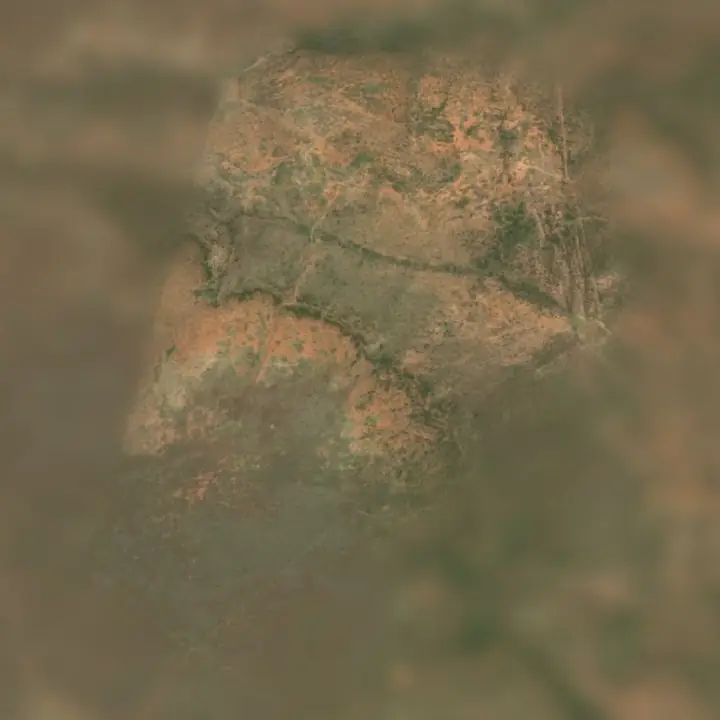
Why screen a project independently
Offtake agreements, pre-finance and equity in ARR projects are often signed long before credits are issued. What you see at that point is the developer's own estimate. A desktop screen gives you a second set of numbers built from public datasets and IPCC defaults, with no stake in the outcome, so you know which claims to question before legal and field due diligence start.
- Turnaround2–3 or 5 business days
- Price$500 or $7,500
- ScopeARR and agroforestry (VM0047)
- DataTreated as confidential
How the screening works for a buyer or investor
Get the boundary from the developer
A KML or KMZ file with the role of each area, the species and start year if known, and the current land use. The intake on app.feasibility.earth takes about 15 minutes.
Method check
Before payment, confirm the project is tree planting on land without forest. If it is REDD+, forest management, blue carbon or soil carbon, we cannot screen it yet.
Eligible area
Forest in 2000 and loss in the last 10 years (Hansen Global Forest Change), built-up land (GHSL), water and wetland (JRC Global Surface Water), slopes over 30° (NASADEM) and recent conversion of native vegetation are removed. Compare the result with the area the developer claims.
Carbon and deductions
The full study projects removals over 40 years in three cases from IPCC 2019 Refinement Tier 1 rates, then deducts uncertainty, a non-permanence buffer and leakage.
Read the red flags
The decision summary lists the barriers, the gaps in information and the work still needed. Those become your questions to the developer.
A Tier 1 sanity check of growth claims
IPCC default growth rates depend on the ecological zone and the continent, and they vary widely. The above-ground rates in our studies for the first 20 years of a stand run from 0.775 tCO2e/ha/yr in African tropical shrublands to 13.097 in African tropical rainforest, a spread of more than fifteen times. A developer forecast that implies rainforest growth on dry savanna is the first thing to ask about.
| Ecological zone (Africa) | Stands ≤20 years | Stands >20 years |
|---|---|---|
| Tropical shrublands | 0.775 | 1.551 |
| Tropical moist deciduous forest | 4.998 | 1.551 |
| Tropical dry forest | 6.721 | 2.757 |
| Tropical mountain system | 9.478 | 3.102 |
| Tropical rainforest | 13.097 | 6.032 |
Tier 1 rates are defaults with wide ranges; for tropical shrublands the IPCC gives young stands only a range, 0.2–0.7 t d.m. (about 0.34–1.21 tCO2e); our screening uses the midpoint with the IPCC default uncertainty of ±90%, a band of 0.078–1.473. A forecast above Tier 1 is not wrong by definition, since good species and site data can justify it, but it should come with that evidence. See carbon sequestration per hectare.
Gross to net: what a buyer can actually receive
Gross removals are not credits. In the anonymised sample study, a tree-planting project on 1,608 eligible ha of dry bushland in East Africa, 69,779 tCO2e gross over 40 years (average case) became a net screening estimate of −2,976 tCO2e: below zero. Leakage from displaced land use was the largest line, at 55,310 tCO2e (79% of gross), because the land use was not given and the mapped crops and rangeland were counted as displaced. A gross figure on its own would have hidden that.
The screening applies the 10% uncertainty deduction VM0047 requires as a minimum for ex-ante estimates, and a 15% buffer, the median of 198 registered ARR projects in our registry data (75th percentile 20%). The real buffer is set by the VCS AFOLU Non-Permanence Risk Tool at validation. Read the non-permanence buffer and gross vs net carbon credits.
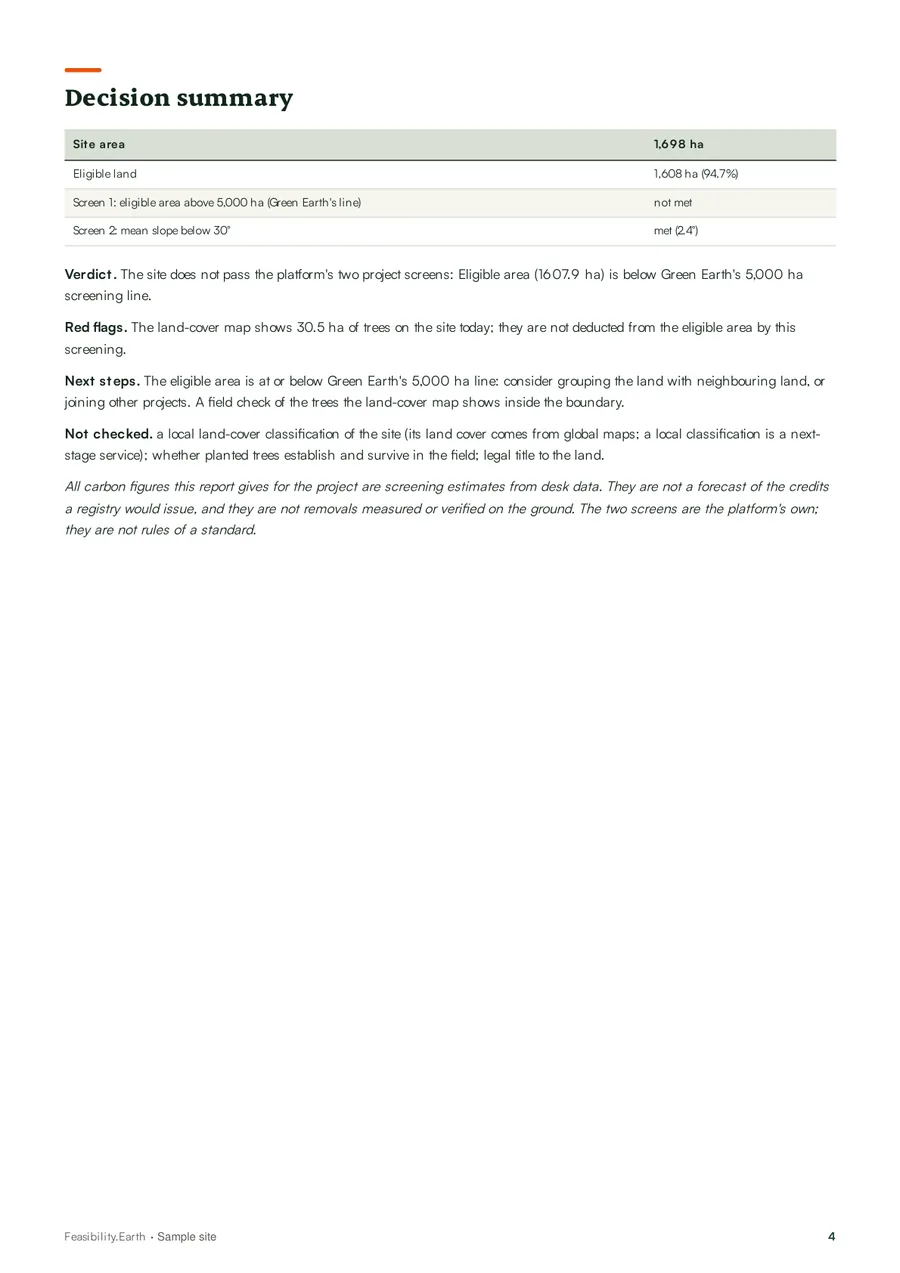 Decision summaryBoth screens, red flags and next steps on one page
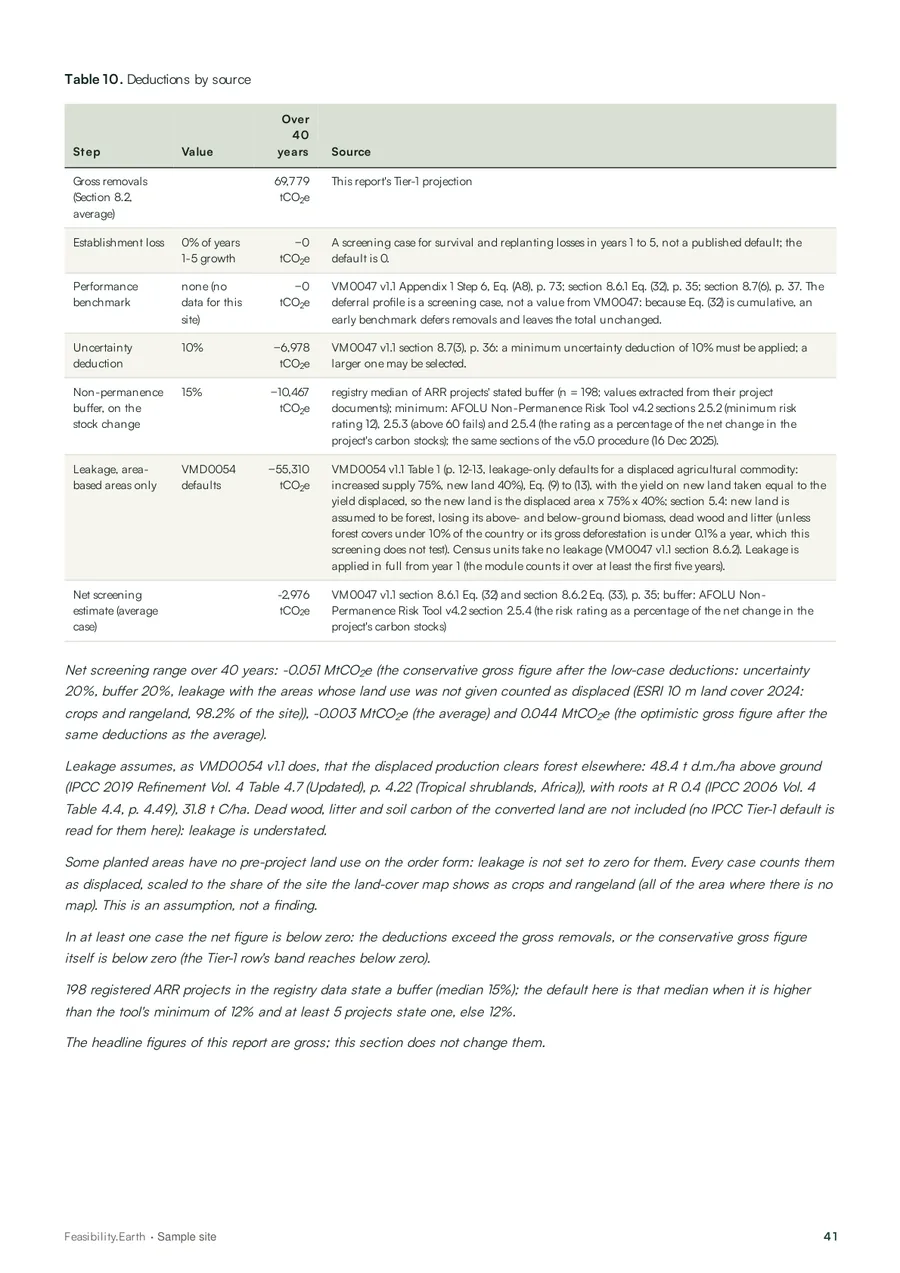 Gross to netEvery deduction with its source
Red flags the screening surfaces
- Land that was forest. In our 17 real screenings, all six sites under 11% eligible had at least 66% of the area classed as forest in 2000. A project area that looks wooded on satellite deserves a hard look.
- Recent clearing. Forest loss or conversion of native vegetation in the last 10 years is excluded from an ARR project.
- Gross presented as net. A forecast with no uncertainty, buffer or leakage line overstates what can be issued.
- Leakage ignored on farmed land. In real screenings, leakage was 79% of gross on a Kenyan dryland site and 56% on a Colombian pasture when current grazing was treated as displaced.
- Growth above the zone's Tier 1 range without species or field evidence.
More patterns in why carbon projects fail feasibility and the country guides.
What the screening is not
Submitted project data is handled as set out in our privacy policy. Prices and refund terms are on the pricing page.
Frequently asked questions
Checking a tree-planting carbon project (afforestation, reforestation and revegetation) before you buy its credits, pre-finance it or invest in it. Our part is the desktop layer: is the land eligible, are the claimed growth rates plausible against IPCC defaults, what is left after the deductions, and which red flags need answers. Legal, financial and field due diligence remain separate.
No. It is an independent desktop screening following VM0047. It does not rate the project, does not replace validation or verification by an accredited body, and makes no claim about credits that will be issued.
The project boundary as KML or KMZ, the role of each area (planting, agroforestry, preservation, reference), species and start year if known, and ideally the current land use. With that, the intake takes about 15 minutes.
The Eligibility Check ($500) in 2–3 business days and the Full Feasibility Study ($7,500) in 5 business days, both from a complete intake. Every report is reviewed by a specialist before release.
Project information submitted for assessment is treated as commercially confidential under our privacy policy and is not shared with third parties except where the law requires it, with processors that help deliver the assessment, or with your written consent. Under our terms the report is the client's property once paid for.
Tree planting on land without forest (ARR), including agroforestry, under VM0047. Not REDD+, improved forest management, blue carbon, soil carbon or cookstoves. The method check tells you before payment whether we can screen a project.