Guide · ARR under VM0047
Reforestation carbon credits: is your ARR project feasible?
Reforestation and afforestation projects can earn carbon credits for the CO2 the new trees remove, if the land, the growth and the deductions work out. This guide explains what VM0047 requires of an ARR project and how a feasibility study tests it before you invest in project design.
What an ARR project is
ARR stands for afforestation, reforestation and revegetation: growing trees and woody vegetation on land that is not forest today. The credits come from carbon removed from the atmosphere as the trees grow. That makes ARR a removal activity, which many buyers value differently from credits for avoided emissions, such as REDD+ forest protection.
| What it is | Typical example | |
|---|---|---|
| Afforestation | Trees on land without forest for a long time | Planting on long-term grassland or cropland |
| Reforestation | Trees on land that was forest before it was cleared | Restoring degraded former forest land |
| Revegetation | Woody vegetation that does not meet the forest definition | Shrubland or sparse tree cover restoration |
| Agroforestry | Trees planted together with crops or livestock | Parkland trees or alley cropping; see the agroforestry guide |
What VM0047 requires
VM0047 is the Verra VCS methodology for ARR, released in 2023. A full validation covers far more, but these are the requirements that most often decide feasibility:
- Eligible land. The land must not be forest at the start of the project and must not have been cleared of native ecosystems in the previous 10 years.
- A quantification approach. An area-based approach, with a dynamic performance benchmark from matched control plots, or a census-based approach for counted trees.
- Leakage. Displaced grazing, cropping and fuelwood are accounted for with the module VMD0054.
- Uncertainty. Removals are reduced for measurement uncertainty.
- Permanence. A share of credits goes to the VCS buffer pool, sized with the AFOLU Non-Permanence Risk Tool.
The gross vs net guide explains the last three in detail. Weighing other standards? See Verra, Gold Standard or Plan Vivo and Plan Vivo for smallholder tree planting.
What decides whether a reforestation project is feasible
Eligible area
Recent forest, settlements, water and steep slopes do not count. On some sites that is a few percent of the boundary; on others it is half.
Growth
Rainfall, dry-season length, temperature and altitude set how fast trees grow. IPCC Tier 1 rates differ several-fold between dry and humid tropical zones.
Species
Species have to suit the site and must not be invasive in the country. A mix of native species is usually easier to defend than a single exotic one.
Current land use
Pasture and cropland mean leakage. Abandoned or degraded land means less leakage, but natural regrowth can raise the baseline.
Scale and permanence
Certification, validation and monitoring have fixed costs, so small areas struggle. Secure tenure, community support and low fire risk lower the buffer.
How an ARR feasibility study tests it
A carbon feasibility study runs these checks from published data before you spend on project design. Ours works through eight sections: method check, boundary and land cover, eligible area, climate and terrain, species, carbon sequestration, gross to net, and conclusion. Every section after the eligible area uses the same area figure.
- Eligibility dataHansen, GHSL, JRC, ESA/ESRI
- Growth ratesIPCC 2019 Tier 1
- SpeciesScreened or shortlisted
- DeductionsLine by line
Start with the eligibility check ($500) if you are not sure the land qualifies, or order the full study ($7,500) if you need the carbon case. The datasets and formulas are on the methodology page.
An example from a real study
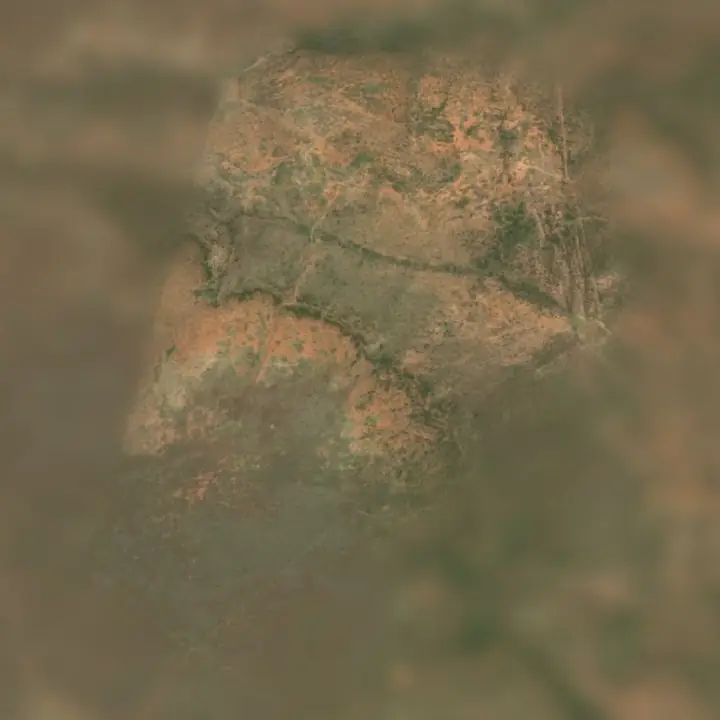
The map at the top of this page is a real tree-planting project on dry bushland in East Africa, anonymised. The boundary covered 1,698 ha, of which 1,608 ha was eligible. No planting plan was given, so the study projected carbon on all 1,608 eligible ha at the IPCC regrowth rate and called the result an upper bound. Over 40 years it estimated 69,779 tCO2e gross and −2,976 tCO2e net, mostly because of a large leakage deduction for displaced land use: the land use was not given, so the mapped crops and rangeland counted as displaced.
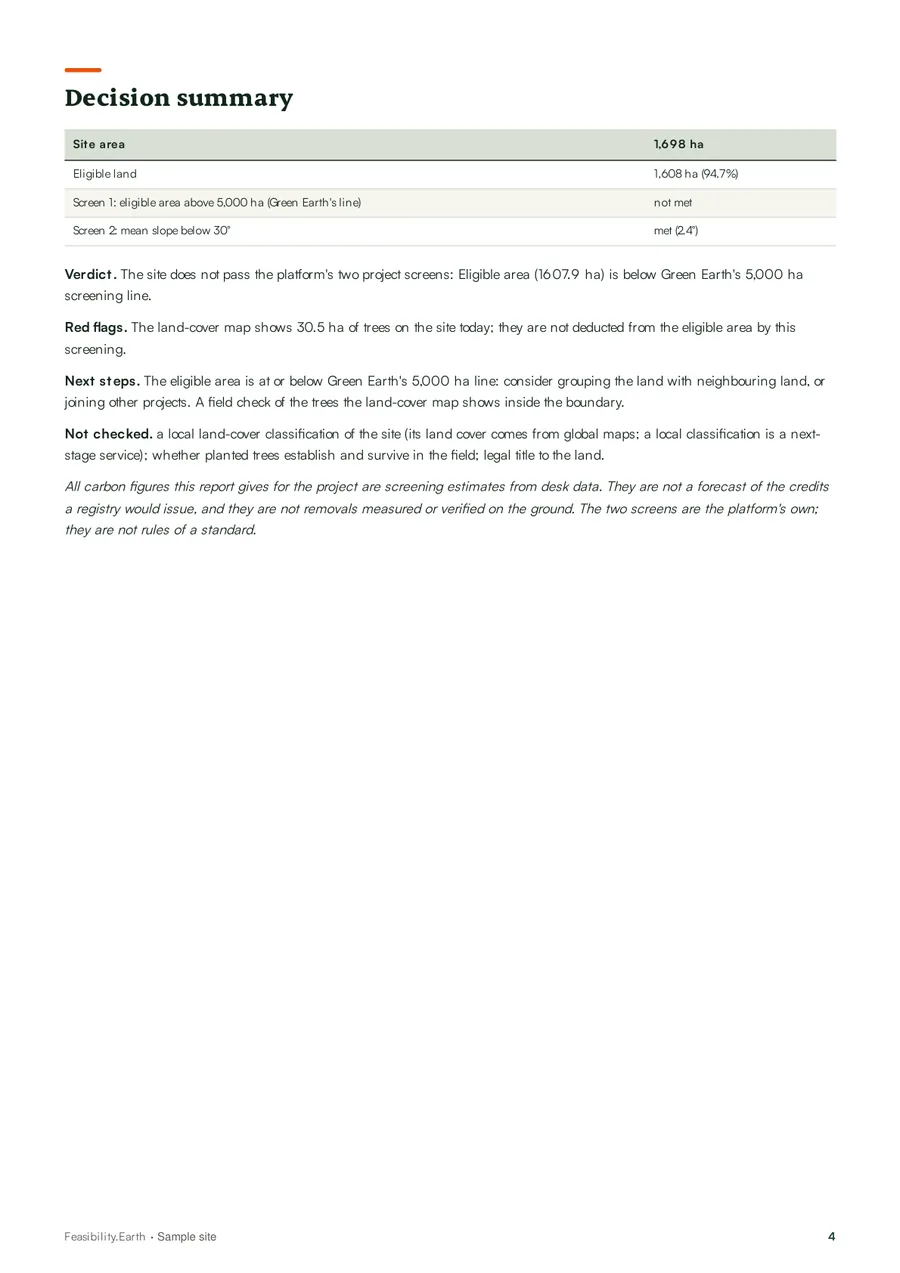 Decision summaryBoth screens, red flags and next steps on one page
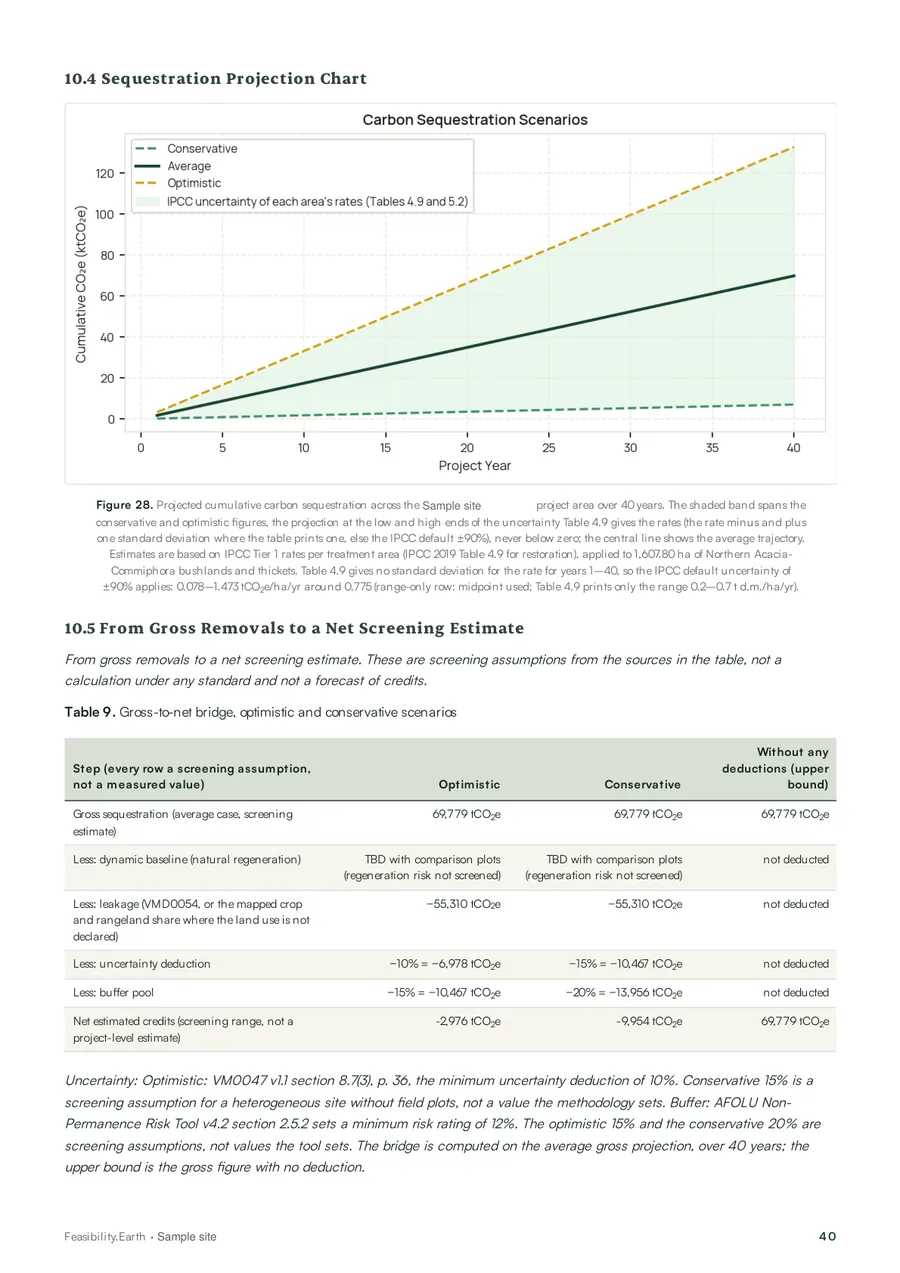 Carbon projectionConservative, average and optimistic cases
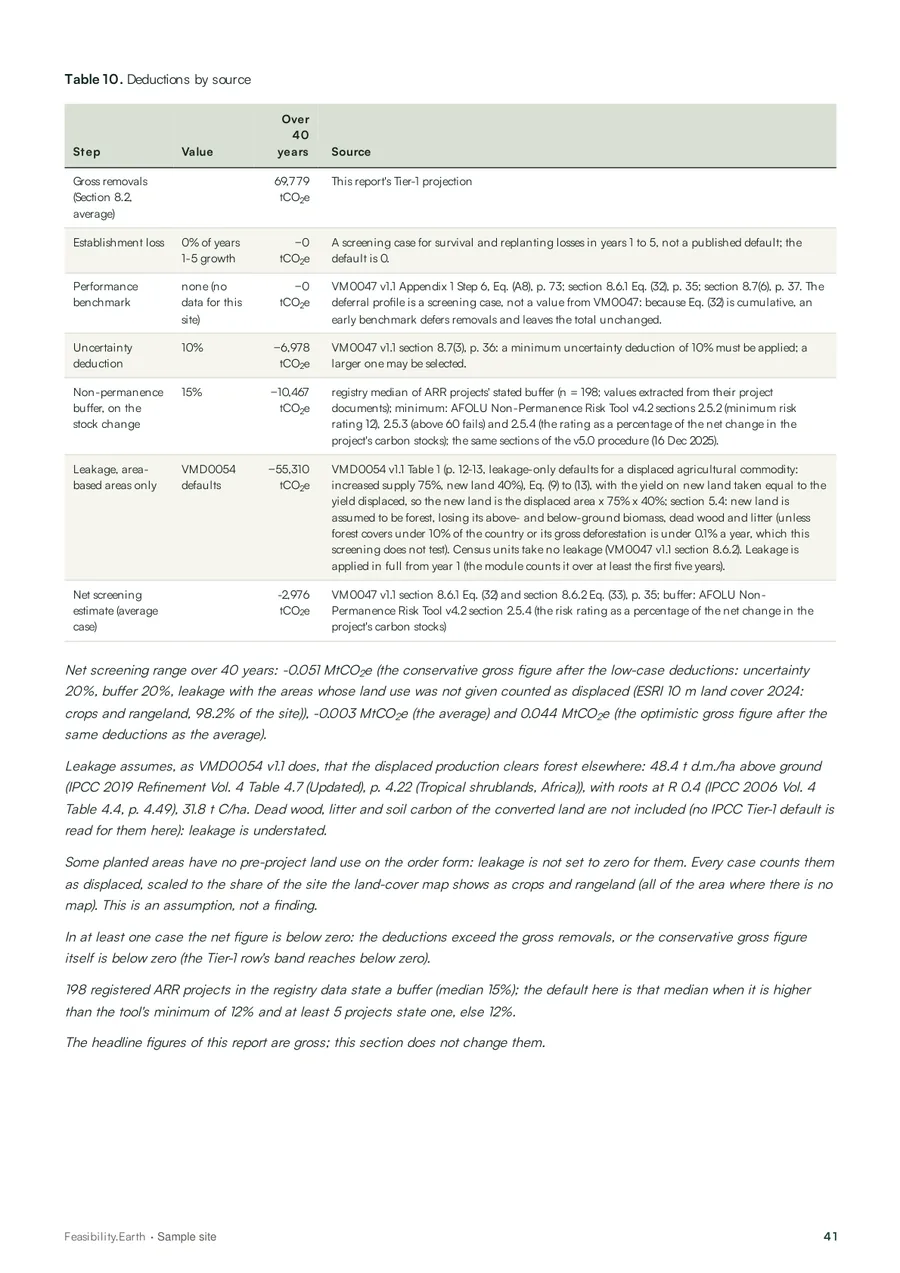 Gross to netEvery deduction with its source
Limits
Frequently asked questions
ARR stands for afforestation, reforestation and revegetation: planting or assisting the growth of trees and woody vegetation on land that is not forest. The carbon credits come from the CO₂ the growing trees remove from the atmosphere. ARR is a removal activity, unlike REDD+, which avoids emissions by protecting existing forest.
VM0047 is the Verra VCS methodology for afforestation, reforestation and revegetation, released in 2023. It covers how to determine eligible land, quantify removals (with an area-based or census-based approach), set the performance benchmark, account for leakage and deduct uncertainty.
Possibly, if the land has not been forest in the last 10 years, the planting is additional to what would happen anyway, the area is large enough to carry the fixed costs of certification, and you have the rights to the land and its carbon. A feasibility study checks the first points from satellite data and lists what has to be confirmed in the field.
It depends on the ecological zone, rainfall, species, planting density and the deductions. IPCC Tier 1 growth rates differ several-fold between dry and humid tropical zones, and deductions for leakage and the buffer can take more than half of gross removals. A per-hectare figure from another project is a poor guide; a site-specific estimate is needed.
Our studies follow VM0047 under the Verra VCS Program. Many of the same questions (eligible land, growth, leakage, permanence) apply under other standards, but we do not screen against their specific rules.
Afforestation is planting trees on land that has not been forest for a long time, commonly at least 50 years. Reforestation is planting on land that was forest more recently but was cleared. For carbon credits under VM0047 both are treated as ARR; what matters is that the land is not forest when the project starts and was not cleared of native ecosystems in the previous 10 years.